Unlock Perfect Vision: Your Ultimate Guide to Progressive Eyeglass Lenses
Unlock Perfect Vision: Your Ultimate Guide to Progressive Eyeglass Lenses
Tired of juggling multiple pairs of glasses for reading and distance? This comprehensive guide demystifies the modern, all-in-one solution for presbyopia, helping you understand, choose, and adapt to your perfect pair. Achieve seamless vision for every activity by exploring our curated selection of progressive eyeglass lenses and find your ideal fit today.
【What Are Progressive Lenses, Really?】
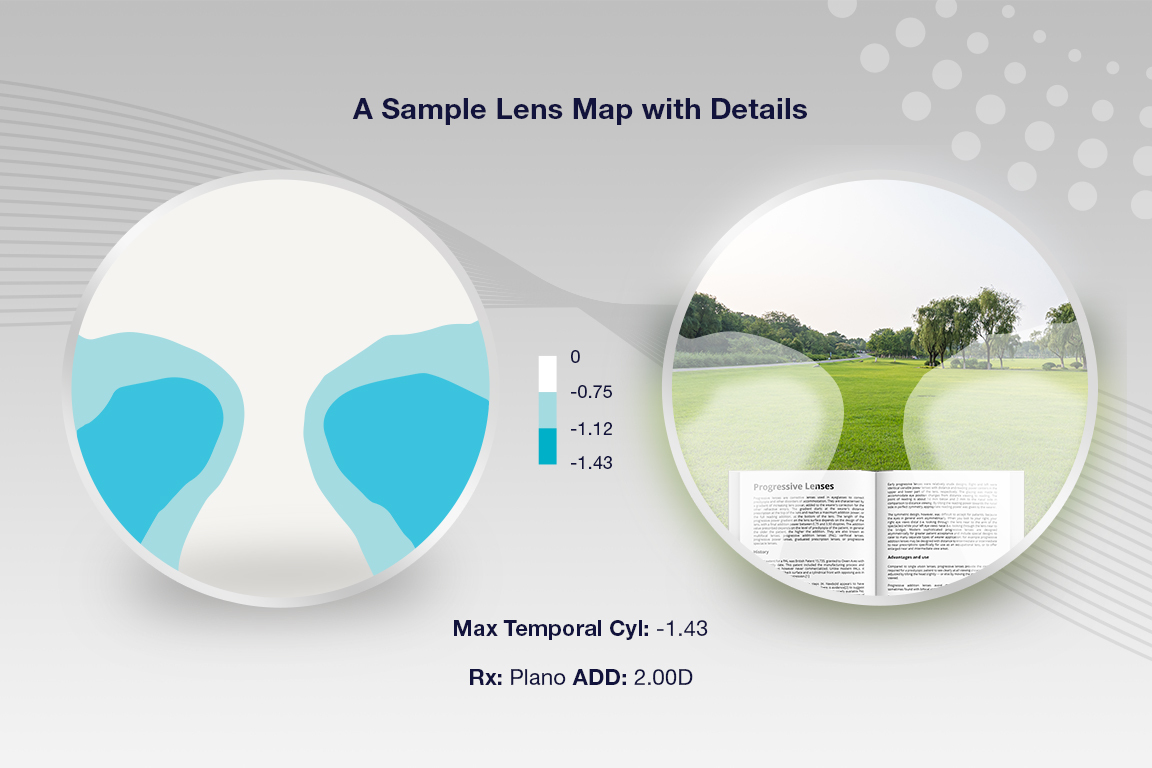
Have you ever found yourself juggling multiple pairs of glasses—one for reading, another for driving? Progressive lenses are the modern, all-in-one solution designed to eliminate that hassle. They offer a seamless and powerful alternative to traditional multifocal glasses.
The Magic Behind Seamless Vision
How do progressive lenses work?
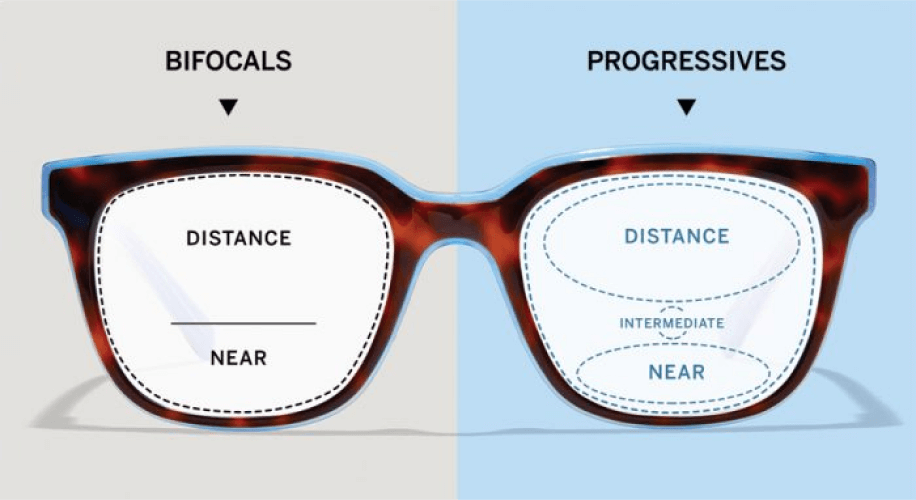
The core innovation of progressive lenses lies in their smooth gradient of power. Unlike bifocals with their distinct, visible lines, these advanced lenses feature a gradual transition between different focal areas. The top portion is designed for clear distance vision, the middle section is optimized for intermediate tasks like computer work, and the bottom is perfected for reading and other close-up activities.
This design creates a more natural and uninterrupted visual experience. As noted by Dr. Steven Reed of the American Optometric Association, this seamless transition not only provides a more youthful look but also delivers a smoother, more comfortable shift in focus, free from the abrupt "image jump" associated with older lens technologies.
Understanding the "Why": The Onset of Presbyopia
What is presbyopia vision?
So, what leads people to need this kind of vision correction? The answer is a common, age-related condition known as presbyopia. It typically begins to affect adults in their early to mid-forties.
You might first notice presbyopia vision when you start holding your phone or a restaurant menu farther away to see the text clearly. This is a normal change in the eye's focusing ability. As we age, the natural lens inside our eye becomes less flexible, making it difficult to focus on objects up close. This is precisely why a single-vision lens is no longer sufficient and a more dynamic solution is required.
No-Line Bifocals Explained: The Modern Multifocal
Progressive lenses are often referred to as "no-line bifocals," and for a good reason. They are a significant functional and aesthetic upgrade from the multifocal glasses of the past. By eliminating the tell-tale horizontal line, they offer a clean, modern appearance.
This design choice isn't just about looking younger; it's about a superior visual experience. The absence of a line means you enjoy a gradual and intuitive shift as your gaze moves from a distant object to a nearby one. This prevents the disorienting image jump that many bifocal wearers dislike, making for a far more comfortable and natural way to see the world. If you believe your struggles with presbyopia could be solved with this technology, exploring the different styles is the next logical step. Seeing the available frames helps you understand how these lenses can fit into your life, which is why browsing a curated selection of progressive eyeglass lenses is the perfect way to find a solution tailored to your visual needs.
【The Great Debate: Progressive Lenses Pros and Cons】
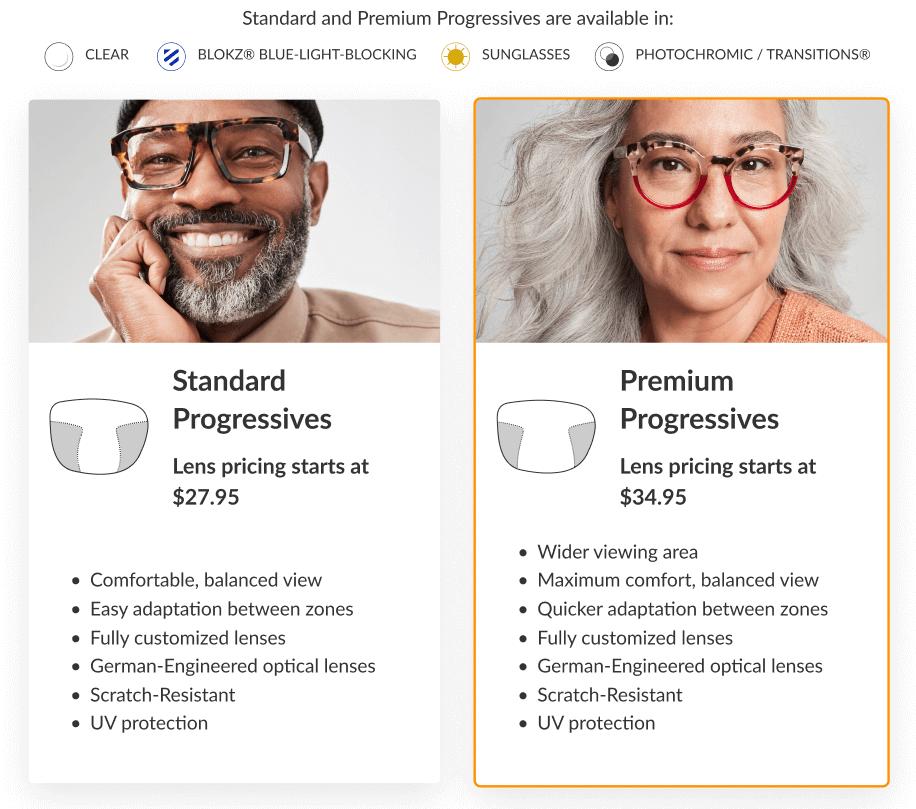
When considering a significant upgrade to your eyewear, it's crucial to weigh the good against the bad. Progressive lenses are a powerful technology, but like any custom tool, they come with a unique set of benefits and potential challenges. Let's break down the progressive lenses pros and cons.
The Upside: Why People Love Their Progressive Lenses
For a vast majority of users, the transition to progressives is a game-changer. The advantages often align perfectly with the demands of a modern, dynamic lifestyle, where switching between different visual tasks is constant.
The Seamless Advantage
The most celebrated benefit is the sheer convenience of having one pair of glasses for all activities. Imagine driving your car, glancing at the GPS, and then reading a text message—all with perfectly clear vision and without ever switching your eyewear. This is the everyday reality with high-quality progressive lenses.
Furthermore, the absence of a distracting bifocal line creates an uninterrupted, natural field of vision. This not only eliminates the disorienting "image jump" of old-fashioned bifocals but also provides a much more youthful, modern appearance that is indistinguishable from single-vision glasses.
The Downside: Potential Hurdles and Criticisms
No technology is without its learning curve, and it's important to be aware of the potential adjustments. These criticisms are typically related to the initial adaptation period and the cost associated with this advanced optical technology.
Navigating Peripheral Distortion
One of the most common initial hurdles is experiencing a bit of blurriness or a "swim" effect in your peripheral vision. This is a normal and expected part of the adjustment period. Because the lenses are designed to blend multiple prescriptions, the outer edges can cause slight visual distortions.
Most people find that their brain quickly adapts and learns to ignore these areas, usually within a few days to a couple of weeks. Following your optometrist's advice on how to turn your head more and your eyes less at first can significantly speed up this adaptation phase.
The Price Tag Question
It's true: progressive lenses are a more sophisticated technology and generally have a higher price tag than basic single-vision or lined bifocal lenses. This leads many to ask, "Are progressive lenses worth the investment?" For 2025 and beyond, the answer increasingly depends on your daily needs.
If you constantly find yourself frustrated by switching between multiple pairs of glasses or straining your eyes during computer work, the value is clear. The investment translates directly into daily comfort, visual efficiency, and convenience. To truly determine if the benefits outweigh the cost for your lifestyle, you need to see what options are available. Exploring the variety of progressive eyeglass lenses allows you to compare features and prices, ensuring you find the perfect pair that fits both your vision and your budget.
【Progressives vs. The World: How Do They Stack Up?】
Now that you understand the core benefits and potential challenges of no-line multifocals, how do they compare to other common types of eyewear? Choosing the right lenses means knowing the alternatives. Let's pit progressives against their main competitors: traditional bifocals and simple reading glasses.
Bifocal vs Progressive Lenses: The Classic Showdown
This is the most frequent comparison for anyone needing multifocal correction. While both aim to solve a similar problem—difficulty seeing at multiple distances—they do so in fundamentally different ways.
The Visible Difference
The most obvious distinction is aesthetics. Bifocals are defined by a distinct, visible line that separates the two prescriptions. This line bisects the lens, with the top portion for distance vision and the bottom segment for near vision.
Progressive lenses, on the other hand, have no lines. They offer a smooth, seamless transition between vision zones, making them look exactly like single-vision glasses. For many, this offers a more modern and youthful appearance.
The Functional Difference
That visible line in bifocals creates a phenomenon known as "image jump." When your eyes move from the distance portion to the reading portion, the image's position abruptly shifts, which can be disorienting and unnatural.
With progressive eyeglass lenses, this jump is eliminated. The gradual change in prescription power allows your eyes to move smoothly between distance, intermediate, and near zones. This provides a far more natural and fluid visual experience, much closer to how your eyes worked before presbyopia.
Reading Glasses vs Progressive Lenses: A Matter of Convenience
What if you only struggle with reading, but your distance vision is fine? Or what if you already wear distance glasses? This is where the comparison to simple reading glasses, or "readers," becomes relevant.
The Single-Tasker vs. The All-Rounder
Reading glasses are a single-task tool. They are designed for one thing only: close-up vision. This means you are constantly taking them on and off, perching them on your head, or hanging them around your neck. They solve one problem but can introduce a constant inconvenience.
Progressive lenses are the ultimate all-rounder for those who need correction for both distance and near vision. They combine everything into one constant, wearable solution. You can drive, work on a computer, and read a book without ever needing to switch your glasses.
Expert Opinion
The choice often comes down to the complexity of your vision needs. As ophthalmologist Dr. Ravi Goel explains, single-vision reading lenses are designed to correct for near vision alone. However, for individuals who require correction at multiple levels—such as for both nearsightedness and presbyopia—multifocal lenses like progressives are the comprehensive solution.
Understanding these key differences is the first step toward visual clarity. The next is seeing how these options translate into real-world eyewear. To find the perfect match for your vision and lifestyle, it's essential to explore the wide variety of progressive eyeglass lenses, allowing you to compare frame styles, lens features, and prices firsthand.
【The Adjustment Journey: Embracing Your New View】
Adapting to progressive lenses is a process of teaching your brain a new way to see. While it may seem daunting, millions of people successfully make the switch every year. Understanding the process is the first step to a smooth transition.
Your First Few Days: What to Expect
The initial experience with new progressive eyeglass lenses can be surprising. Your brain and eyes need time to coordinate and understand the different vision zones within the seamless lens.
Adjusting to progressive lenses: The "Sea Legs" Phase
A common experience during the first few days is a sense of slight disorientation. One user described it as feeling like the ground was slightly warped or closer than it actually was, a sensation similar to mild motion sickness or finding your "sea legs" on a boat.
This feeling is a completely normal part of the adaptation process. Your brain is simply getting used to the smooth gradient of power in the lenses. For most people, this initial adjustment period subsides within a few days, though it can sometimes take up to two weeks.
Tips for a Smoother Transition
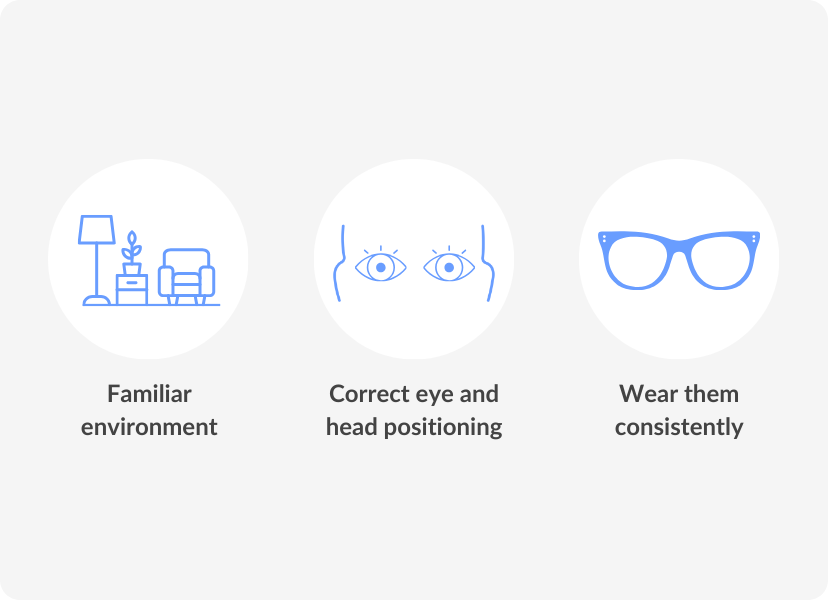
You can actively help your brain adapt more quickly. Follow these tips to shorten the learning curve:
* **Wear them constantly.** The best way to adapt is through consistent use. Resist the temptation to switch back to your old glasses.
* **Point your nose.** Instead of just moving your eyes to look at something, turn your head and point your nose directly at it. This ensures you're looking through the correct part of the lens for the intended distance.
* **Practice the zones.** Get to know your lenses. Use the top portion for distance viewing (like watching TV), the middle for intermediate tasks (like computer work), and the bottom for close-up reading.
Troubleshooting Progressive Lenses and Common Issues
What if the blurriness and disorientation don't go away after a couple of weeks? If you're still struggling, it's likely not your fault—it could be an issue with the lenses or the measurements.
Progressive lens distortion problems
Persistent blurriness, headaches, or noticeable distortion, especially on the periphery of your vision, are signs of a problem. Often, this can be corrected with a simple frame adjustment by an optician to change how the glasses sit on your face.
However, if that doesn't work, it may indicate that the lens measurements themselves are not perfectly aligned with your eyes' needs.
Pupillary distance for progressive lenses is critical
One of the most crucial measurements for a successful progressive lens experience is the pupillary distance (PD). This is the exact distance between the centers of your pupils, and it determines where the optical center of the lens should be placed.
An incorrect PD, even by a millimeter, is a leading cause of adaptation problems with multifocal lenses. It can cause eye strain, blurriness, and make it difficult to find the "sweet spot" in each vision zone.
Ensuring these critical measurements are precise is paramount for visual comfort and clarity. The best way to avoid these adjustment issues is to start with a quality product tailored specifically to your measurements. Exploring the diverse options for customizable progressive eyeglass lenses allows you to input precise pupillary distance and other prescriptions, ensuring your new glasses are a perfect match from day one.
【Making the Investment: Cost, Materials, and Features】

Understanding the components that make up your new glasses is key to making a wise investment in your vision. From the price tag to the material of the lenses and optional coatings, each choice impacts your daily comfort and the glasses' longevity.
The Real Cost of Progressive Lenses
The final price of progressive lenses can vary significantly, so it's helpful to know what to expect. Setting a budget in 2025 means understanding the baseline and the factors that can increase the cost.
What to Budget
There is no single price for progressive eyeglass lenses. The cost depends heavily on where you shop and what you need. For example, some retailers like Liingo may offer progressive lens add-ons starting around $179, while specialized products like performance goggle inserts from SVED Optics can be upwards of $234.
Factors Influencing Price
Several key elements determine the final cost of your progressive lenses. The brand name, the specific lens material you choose, any additional coatings (like anti-glare or scratch-resistance), and the retailer's pricing structure all play a significant role.
Choosing Your Lens Material
The material of your lenses affects not only their weight and thickness but also their durability and safety. The right choice often depends on your prescription strength and lifestyle.
Polycarbonate progressive lenses
For those with an active lifestyle, polycarbonate lenses are an excellent choice. This material is remarkably lightweight and impact-resistant, making it a much safer option than standard plastic. Companies like SVED Optical utilize thin polycarbonate for their goggle inserts precisely because of these protective qualities.
High-index progressive lenses
If you have a strong prescription, your optometrist will likely recommend high-index progressive lenses. This advanced material is designed to be significantly thinner and lighter than its standard counterparts, helping you avoid the thick, heavy "coke bottle" effect that can come with high-power vision correction.
Essential Add-Ons for Your Lenses
Beyond the core lens, modern add-ons can enhance your visual experience, tailoring your glasses to specific environments and needs, from bright sunlight to long hours in front of a screen.
Can you get progressive lenses in sunglasses?
Absolutely. Having progressive lenses in your sunglasses is a game-changer for outdoor activities. Premium brands like Bajio and Costa del Mar specialize in high-performance polarized sunglasses with progressive prescription options. One user noted their progressive sunglasses were a "real bonus" for driving and fishing, as they no longer needed to switch between reading glasses and sunglasses.
The Role of Blue Light Filtering for Progressive Lenses
Blue light filtering is a popular but debated add-on. Some brands, like Bajio, report that their proprietary lens technology blocks up to 95% of harmful blue light, which they claim helps reduce eye strain. However, it's important to note the official stance of the American Academy of Ophthalmology, which states there is no scientific evidence that blue light from digital screens causes eye damage or that filtering it reduces strain. They advise taking frequent breaks from the screen as a more proven method.
Ultimately, balancing cost, materials, and features is crucial for finding the perfect pair of multifocal glasses. To see how these options come together and compare different configurations, you can explore a wide range of customizable progressive eyeglass lenses online, which allows you to find the ideal combination that fits both your prescription and your budget.
【Buying Smart: Your Guide to Online and In-Store Purchases】
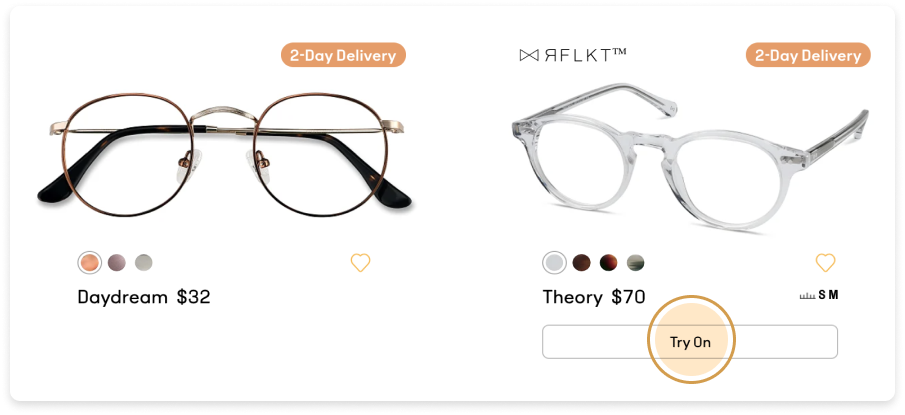
Navigating the world of eyewear purchasing has changed. Whether you prefer the convenience of online shopping or the hands-on experience of a physical store, knowing how to buy smart is essential for getting the perfect pair of progressive glasses.
How to Order Prescription Glasses Online with Confidence
Shopping for glasses online can feel like a leap of faith, but with the right preparation, it's a seamless and often more affordable process. Success hinges on a few critical details.
The Non-Negotiables
Before you even start browsing frames, there are two items you absolutely must have. First is a current, valid prescription from a qualified ophthalmologist or optometrist. This is the blueprint for your lenses.
Equally important is your pupillary distance (PD). This measurement, which is the distance between your pupils, is crucial for correctly aligning the different vision zones in progressive eyeglass lenses. An inaccurate PD can render your multifocal glasses ineffective, so ensure it's precise.
Leveraging Technology
Modern online retailers have developed impressive tools to bridge the gap between virtual and in-person shopping. Companies like GlassesUSA and Warby Parker offer virtual try-on features that use your camera to show you how frames will look on your face.
For a more tactile experience, some retailers go a step further. Liingo, for example, allows you to select up to four frames to try at home for five days, giving you ample time to see how they fit and feel in your daily life before committing.
Finding the Best Retailers for Progressive Eyewear
The right retailer depends on your specific needs, from budget constraints to a demand for high-performance specialty gear. In 2025, the market is filled with excellent options for every type of progressive lens wearer.
Top-Rated Online Glasses Retailers
For general use, these online stores are consistently praised for their selection, service, and value:
* **GlassesUSA:** A fan favorite for its vast variety of frames and frequent, generous sales.
* **Zenni Optical:** The go-to choice for budget-conscious shoppers, offering some of the most affordable progressive options, including for children.
* **Eyebuydirect:** Known for its highly customizable lenses and a strong balance of trendy, affordable frames.
* **Warby Parker:** Famous for its popular home try-on program and the added benefit of physical stores for adjustments and support.
Specialty and High-Performance Brands
If your lifestyle demands more than a standard pair of glasses, these specialty brands deliver cutting-edge progressive eyewear.
* **SVED Optics:** This company specializes in creating high-quality, custom prescription inserts for sports sunglasses and goggles, ensuring clear vision during intense activities.
* **Costa del Mar & Bajio:** These two are industry leaders in high-tech, progressive polarized sunglasses. They are the top choice for outdoor enthusiasts, particularly for fishing and water sports, where reducing glare and seeing clearly at all distances is paramount.
Finding the perfect pair is about matching your prescription and lifestyle needs with the right retailer. To effectively compare the features, frames, and prices from a wide array of sellers, exploring a comprehensive marketplace is the best first step. You can view a diverse selection of progressive eyeglass lenses to find the ideal combination of technology and style that solves your vision needs.
Your Complete Guide to Clear, Multifocal Vision
In summary, progressive lenses offer a modern, line-free solution to presbyopia, providing seamless visual transitions from distance to intermediate and near tasks. The primary advantages are the convenience of a single pair of glasses for all activities and a more youthful, natural appearance without the disorienting "image jump" of traditional bifocals. However, potential drawbacks include an initial adjustment period, which may involve peripheral distortion, and a higher cost compared to single-vision or lined bifocal lenses.
When compared to bifocals, progressives are aesthetically superior and functionally more natural. Against reading glasses, they provide an all-in-one convenience that eliminates the need to constantly switch eyewear.
A successful transition hinges on a proper adaptation strategy—wearing them consistently and pointing your nose where you look—and, most critically, on precise measurements, especially the pupillary distance (PD). When making your purchase, whether online or in-store, having an up-to-date prescription and an accurate PD is non-negotiable. By weighing the pros and cons and understanding the importance of customization, you can confidently invest in a pair of progressive lenses that will bring clarity and convenience back to your daily life.
``` MjAyNTA3MjYwODI4MzU 当前显示MjAyNTA3MjYwODI4MzU。


Comments
Post a Comment