Understanding Transition Lenses
How do transition lenses work?
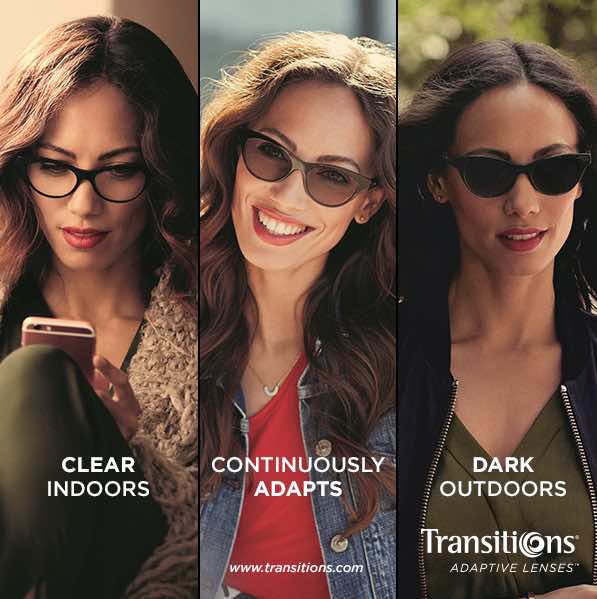
Transition lens glasses function using a sophisticated chemical process involving photochromic molecules. These tiny molecules are embedded directly within the lens material or applied as a coating.
Photochromic molecules react to UV light, causing them to darken.
The magic happens when photochromic molecules are exposed to ultraviolet (UV) light, primarily from the sun. This exposure causes a structural change in the molecules. As more UV light hits the lens, more molecules change structure, causing the lens to darken. This reaction is instantaneous and depends on the intensity of the UV radiation. Different types of photochromic lenses react at varying speeds and reach different levels of tint.
The lenses return to clear when UV exposure diminishes.
When you move indoors or away from direct sunlight, the UV light levels decrease. The photochromic molecules revert to their original structure. This causes the lens tint to fade, returning the transition lens glasses to a clear state suitable for indoor vision. The time it takes to return to clear can vary depending on temperature and the specific lens technology, but it's typically just a few minutes.
Transition lenses UV protection
A significant benefit of transition lens glasses is the built-in UV protection. Regardless of whether the lenses are clear or tinted, they block 100% of harmful UVA and UVB rays. This consistent protection is crucial for long-term eye health, reducing the risk of conditions like cataracts and macular degeneration. Wearing photochromic lenses ensures your eyes are shielded from damaging UV radiation whenever you are outdoors in 2025. To ensure you get full UV protection from quality lenses, consider exploring options that clearly state 100% UV blocking. 全天候护眼眼镜
Are transition lenses worth it?
Many people ponder the value of transition lens glasses. They offer a unique blend of functionality, combining two eyewear needs into one pair. Evaluating their worth depends on your lifestyle and priorities, but they provide compelling advantages for many users in 2025.
Convenience of having both eyeglasses and sunglasses in one.
The most cited benefit is the unparalleled convenience. With transition lens glasses, you don't need to carry a separate pair of prescription sunglasses. As you move between indoors and outdoors, the lenses automatically adjust, providing clear vision inside and sun protection outside. This seamless transition eliminates the hassle of switching glasses or forgetting your sunglasses. For individuals needing prescription eyewear constantly, this feature is a major convenience boost.
Cost-effectiveness compared to buying separate pairs.
While the initial cost of photochromic lenses might be slightly higher than standard clear lenses, they can be more cost-effective in the long run. Buying one pair of prescription transition lens glasses can be cheaper than purchasing one pair of prescription eyeglasses and one pair of prescription sunglasses. You save money on frames and potentially avoid extra lens treatments on a second pair. This combined solution offers significant value for many wearers.
Enhanced eye protection from UV rays.
Beyond convenience and cost, the enhanced eye protection is a critical factor in determining if transition lens glasses are worth it. As mentioned, they provide 100% UV protection in all states – clear or dark. This consistent protection is vital for preventing long-term eye damage. Unlike carrying sunglasses, which you might forget or choose not to wear in partial sun, photochromic lenses are always on your face, always protecting your eyes whenever UV rays are present. This constant shield contributes significantly to maintaining eye health over time. If you're looking for eyewear that automatically adapts to light and protects your eyes from UV, checking out various options might be the next step. 防紫外线变色镜片
For those considering the combined benefits of convenience, cost savings, and essential eye protection, exploring the range of transition lens glasses could be a worthwhile investment in 2025.
【Transition Lenses: Pros and Cons】

Transition lenses pros and cons
Evaluating transition lens glasses involves looking at their strengths and weaknesses. For many in 2025, the benefits outweigh the drawbacks, but understanding both sides is key to making an informed choice about this type of eyewear.
Pros: Convenience, UV protection, reduced eye strain.
One of the biggest advantages of photochromic lenses is the sheer convenience. You only need one pair of glasses for both indoor and outdoor activities. This eliminates the need to switch between prescription eyeglasses and prescription sunglasses, making transitions effortless.
The constant, automatic 100% UV protection is a major health benefit. Your eyes are shielded from harmful UVA and UVB rays whenever you step outside, regardless of visible light levels. This consistent defense helps protect against long-term eye damage.
Transition lens glasses also contribute to reduced eye strain. By adjusting the tint automatically, they help maintain comfortable vision in varying light conditions, preventing the need to squint in bright sun or struggle in dim indoor environments. This adaptive feature enhances visual comfort throughout the day.
Cons: Performance in cars, temperature sensitivity, cost.
While incredibly convenient, transition lens glasses have limitations. A notable drawback is their reduced effectiveness inside a car. Modern car windshields block much of the UV light needed to activate the darkening process, meaning the lenses will not get as dark as they would outdoors.
Temperature can also affect performance. Photochromic lenses tend to darken more effectively and fade back to clear faster in cooler temperatures. In very hot conditions, they may not get as dark and can take longer to fully clear.
The initial cost of transition lens glasses can be higher than standard clear lenses. While potentially saving money by combining two pairs into one, the upfront investment for the photochromic technology is something to consider when budgeting for new eyewear in 2025.
Despite these considerations, for many, the advantages of automatic adaptability and continuous UV protection make the investment worthwhile. If you're weighing the pros and cons for your lifestyle, exploring current options can help determine if transition lens glasses are the right fit. prescription photochromic glasses
Addressing Common Concerns
Potential wearers often have questions about the practical performance and longevity of transition lens glasses. Addressing these common concerns helps clarify expectations and highlight the capabilities of modern photochromic lenses.
Do transition lenses work in the car?
As touched upon earlier, transition lens glasses do not darken to their full potential inside a car. This is because car windshields and windows block most of the UV light necessary to activate the photochromic molecules. They may achieve a slight tint, but they won't provide the deep shade of dedicated sunglasses. However, the lenses still provide 100% UV protection while in the car, even if they remain mostly clear.
Transition lenses durability
The durability of transition lens glasses is generally very good, similar to high-quality standard prescription lenses. The photochromic technology is either embedded within the lens material or applied as a multi-layer coating that is chemically bonded to the lens. This makes the light-adaptive properties quite robust under normal use. Proper lens care, such as cleaning with appropriate solutions and using a case, is still essential to maintain their condition.
Transition lenses scratch resistant
While the photochromic feature itself isn't inherently scratch-proof, most quality transition lens glasses sold in 2025 come with a durable scratch-resistant coating applied during manufacturing. This coating sits on the surface of the lens, protecting both the base material and the photochromic layers from minor abrasions. Like any lens, they are not entirely scratch-proof, but the coating significantly enhances their longevity and clarity when handled with care. Understanding the separate nature of the scratch-resistant coating from the adaptive tint is important when considering lens options. If you're concerned about durability and scratch resistance, looking into lenses that specifically offer robust coatings in addition to the adaptive tint is a good step. adaptive tint lenses
【Choosing the Right Transition Lenses】
When selecting transition lens glasses, understanding the options available in 2025 is crucial. This section guides you through key factors like cost and the different types of photochromic technology and brands to help you make an informed decision for your new eyewear.
Transition lenses cost
The investment in transition lens glasses can vary. While potentially saving money by combining two pairs into one, understanding the price factors helps manage your budget and expectations when shopping for photochromic lenses.
Factors influencing the cost: brand, lens material, coatings.
Several elements influence the final price of transition lens glasses. The specific brand of the photochromic technology is a major factor; established brands like Transitions often reflect years of research and development in their pricing. The lens material chosen also plays a significant role. Standard plastic (CR-39) is typically the least expensive, while materials like polycarbonate (impact-resistant, good for safety) or high index (thinner for stronger prescriptions) come at a higher cost. Additional lens coatings, such as anti-reflective, scratch-resistant, or anti-fog treatments, add to the total price but enhance durability and performance.
Comparing prices from different retailers.
Shopping around is key to finding the best value for your transition lens glasses. Prices can vary significantly between different optical retailers, both brick-and-mortar stores and online vendors. While the cost of the basic lens with the photochromic treatment might be similar, differences arise in frame pricing, examination fees, and promotional offers. Online retailers may offer competitive pricing on lenses and frames but lack the in-person fitting and adjustments of a local optician. It's important to compare not just the final price but also the included services and warranty.
Insurance coverage and available discounts.
Many vision insurance plans provide coverage for prescription lenses, and this often includes an allowance for lens upgrades like photochromic lenses. Check your specific policy details to understand your coverage for "transition lenses" or "adaptive lenses." Beyond insurance, inquire about available discounts. Retailers frequently offer promotions, especially online, and discounts may also be available through membership programs, employer benefits, or during special sales events throughout the year. Maximizing insurance and utilizing discounts can significantly reduce the out-of-pocket expense for your new eyewear in 2025. Knowing the cost components and potential savings can help you budget effectively when looking for transition lens glasses. affordable transition lens glasses
Best transition lenses brands
Exploring the leading brands helps identify which photochromic lenses might best suit your needs. Different manufacturers offer various technologies and features designed to improve performance, speed, and clarity in varying light conditions.
Popular brands and their features: Transitions, Sensity, LifeRx.
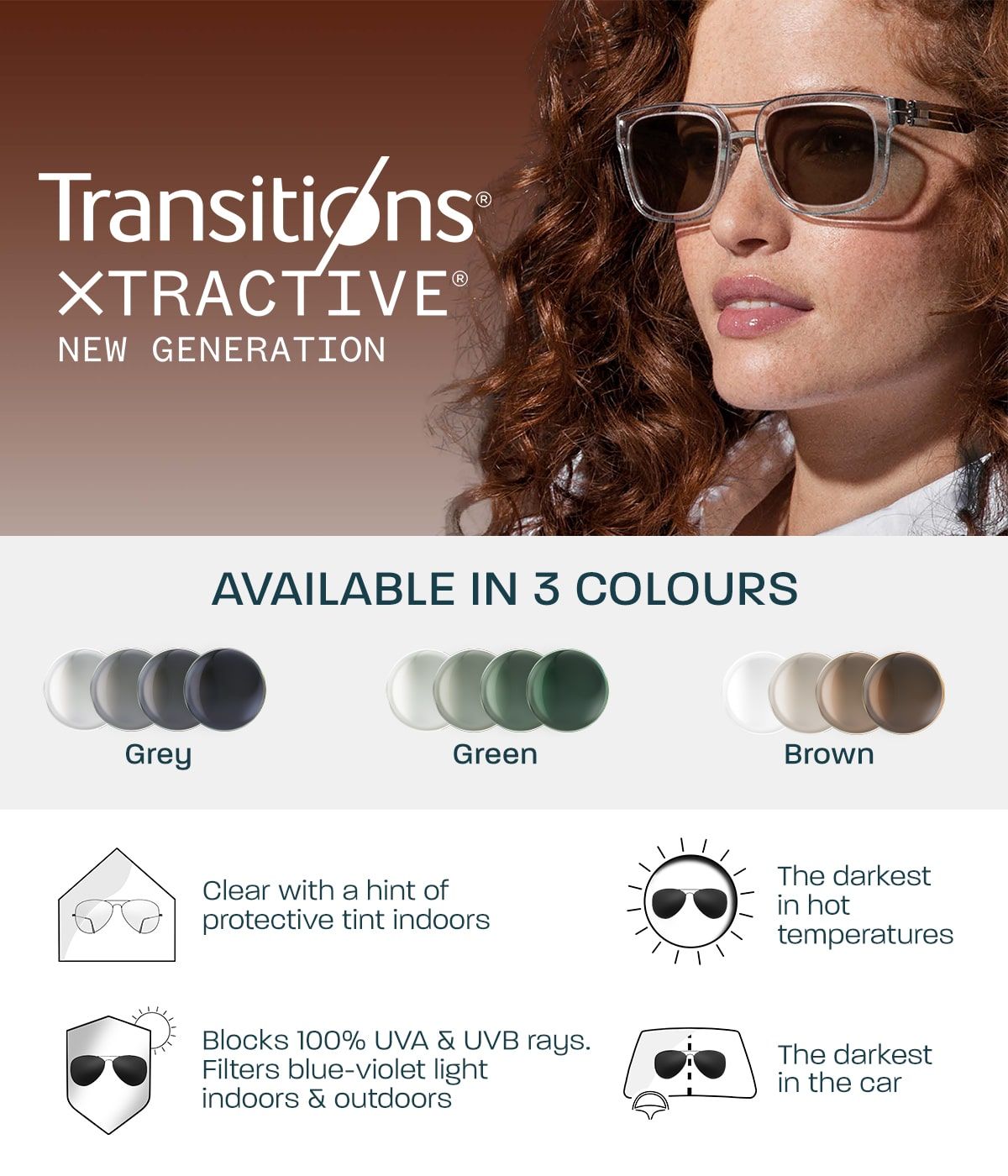
Several manufacturers are prominent in the transition lens glasses market. Transitions Optical is perhaps the most widely known brand, offering a range of product lines like Transitions Signature (everyday use), Transitions XTRActive (darkens more in cars and gets darker outdoors), and Transitions Vantage (polarized when dark). Hoya's Sensity lenses are another popular option, known for their fast reaction times. VSP Optics offers LifeRx lenses, providing reliable photochromic performance. Each brand has its proprietary technology with slight variations in speed of activation/fade back, indoor clarity, and the maximum darkness achieved outdoors. Researching these options helps you find the adaptive lens technology that aligns with your lifestyle.
Fastest transition lenses
A common question about transition lens glasses is which ones are the fastest. Speed of activation (darkening) and fade back (clearing) are key performance indicators. While technology has advanced significantly, achieving maximum darkness or returning to full clarity instantly is not yet possible. Generally, lenses designed for everyday indoor/outdoor use (like Transitions Signature) balance speed with clarity. Lines designed for more demanding light conditions (like Transitions XTRActive) may get darker but might take slightly longer to fade back. When choosing, consider what's more important: ultimate darkness or quicker return to clear. Comparing the stated performance characteristics of different brands and product lines is recommended.
High index transition lenses
Individuals with stronger prescriptions often require high index lenses, which are specially engineered to be thinner and lighter than standard lenses while providing the necessary vision correction. Fortunately, transition lens glasses technology is widely available in high index materials in 2025. This means you don't have to sacrifice lens thinness or weight to gain the convenience and UV protection of photochromic lenses. Whether you need a 1.60, 1.67, or 1.74 index lens, you can typically find an option that incorporates adaptive tint technology. This ensures that wearers with high prescriptions can also enjoy the benefits of a single pair of glasses for all light conditions. Finding the right brand and lens index combination ensures you get both effective vision correction and adaptive comfort. high index photochromic glasses
【Transition Lenses for Specific Needs】
Transition lens glasses offer versatile solutions for various lifestyles and activities in 2025. This section explores how adaptive lenses cater to specific needs, from driving and cycling to providing crucial eye protection for children. Understanding these applications helps you determine if photochromic technology is the right choice for your unique requirements.
Transition lenses for driving
Driving presents unique challenges for eyewear. Constant changes in light, from open roads to tunnels or tree-lined streets, require lenses that can quickly adapt. Transition lens glasses can offer benefits, but specific considerations are important for drivers seeking optimal vision and comfort behind the wheel.
Considerations for driving: activation in cars, glare reduction.
A key factor for using photochromic lenses while driving is their activation inside a vehicle. Standard adaptive lenses primarily react to UV light. Since most modern car windshields block a significant amount of UV rays, these lenses may not darken sufficiently to provide sunglass-level tint inside the car. This can be a limitation for drivers relying solely on their transition lenses for sun protection indoors. While these lenses do offer glare reduction outdoors, the limited activation inside a vehicle means they don't always perform like dedicated sunglasses while driving. However, some advanced photochromic technologies, like those in specific Transitions® product lines (e.g., XTRActive), are designed to react to visible light as well, allowing them to darken more effectively behind the windshield of a car.
Alternatives for driving: polarized lenses, clip-on sunglasses.
Given the potential limitations of standard transition lens glasses in cars, drivers might consider alternatives. Polarized lenses are highly effective at reducing glare, particularly the blinding glare reflected off horizontal surfaces like roads or water. While they don't adapt to light levels, they offer superior glare reduction in bright conditions, including inside a car. Another practical alternative is using clip-on sunglasses over prescription glasses. These offer a simple and often cost-effective way to gain sun protection and glare reduction when needed for driving, allowing you to use your regular clear or transition lenses at other times. Choosing the best option depends on your specific driving habits and light sensitivity. Consider whether you need a solution that adapts constantly or one that offers maximum glare reduction in specific conditions. Finding the right light-adaptive lenses or alternatives for driving can significantly improve comfort and safety on the road. glasses for driving
Transition lenses for cycling
Cyclists frequently encounter rapid changes in light as they ride through varied landscapes – moving from open sunlight into shaded forests, under bridges, or through tunnels. Transition lens glasses offer a compelling solution for cyclists seeking convenience and adaptability in their eyewear.
Benefits for cyclists: adapting to changing light, eye protection.
For cyclists, photochromic lenses provide significant advantages by automatically adjusting to prevailing light conditions. As you move from bright sun to shade, the lenses quickly lighten, ensuring you maintain clear vision without needing to stop and change glasses. Conversely, upon exiting a shaded area, they darken to provide sun protection. Beyond light adaptation, these lenses also serve as essential eye protection from wind, dust, insects, and road debris – hazards cyclists face constantly. Having a single pair of adaptive glasses simplifies equipment and ensures continuous protection and optimal visibility across different terrains and times of day.
SunGod Airas BF with Iris Photochromic lens review
Performance eyewear brands also incorporate photochromic technology. For example, a review of the SunGod Airas BF with Iris Photochromic lens, designed specifically for cycling, would highlight its ability to adapt rapidly to changing light, a crucial feature when riding varied routes. Such a review might detail the speed of transition from clear to dark and back again, lens clarity across different tints, and how effectively the lens manages glare and enhances contrast on the road or trail. Cyclists looking for high-performance transition lens glasses often research specific product reviews to understand real-world performance in challenging cycling conditions, focusing on how well the lens technology handles sudden shifts in light. cycling transition glasses
Transition lenses for kids
Protecting children's eyes from harmful UV rays from a young age is critical for long-term eye health. Transition lens glasses provide an excellent, practical solution for children who wear prescription glasses, ensuring their eyes are protected whether they are indoors or playing outside in 2025.
Benefits of transition lenses for children: UV protection, convenience.
One of the most significant benefits of photochromic lenses for children is the constant, automatic UV protection they provide outdoors. Children often spend considerable time playing outside, exposing their eyes to UV radiation which can accumulate over a lifetime and contribute to future eye problems. Adaptive lenses block 100% of UVA and UVB rays whenever they are activated by sunlight. The convenience factor is also huge for kids and parents; children only need one pair of glasses for school, playtime, sports, and family outings, eliminating the need to carry or remember a separate pair of sunglasses and reducing the risk of losing them.
Considerations for kids: durability, fit, and frame options.
When choosing transition lens glasses for children, durability is paramount. Kids' glasses need to withstand rough handling. Fortunately, photochromic technology is available in highly impact-resistant lens materials like polycarbonate, which is often recommended for children's eyewear for safety. Ensuring a proper fit is also crucial; frames must be comfortable and stay securely on the child's face during activities. Many optical retailers offer a wide range of durable, flexible, and appropriately sized frames for children in various fun styles and colors. Verifying that the desired adaptive lens technology is compatible with robust children's frames and materials ensures you find a safe, effective, and appealing option for your child's vision needs. transition lens glasses for kids
Transition Lenses: Beyond the Basics
Moving past specific applications, let's delve deeper into how transition lens glasses compare with other popular lens technologies and address common questions about their performance. Understanding these comparisons helps clarify what photochromic lenses offer and whether they are the best choice for your vision needs in 2025. This section covers the differences between transition and polarized lenses, explores blue light filtering options, and discusses how dark transition lenses actually get.
Transition lenses vs polarized
When choosing eyewear, users often encounter two common terms: transition lenses and polarized lenses. While both aim to improve vision in bright conditions, they function in fundamentally different ways. Understanding this distinction is crucial for selecting the right lens technology for your lifestyle.
Understanding the difference: photochromic vs. polarization.
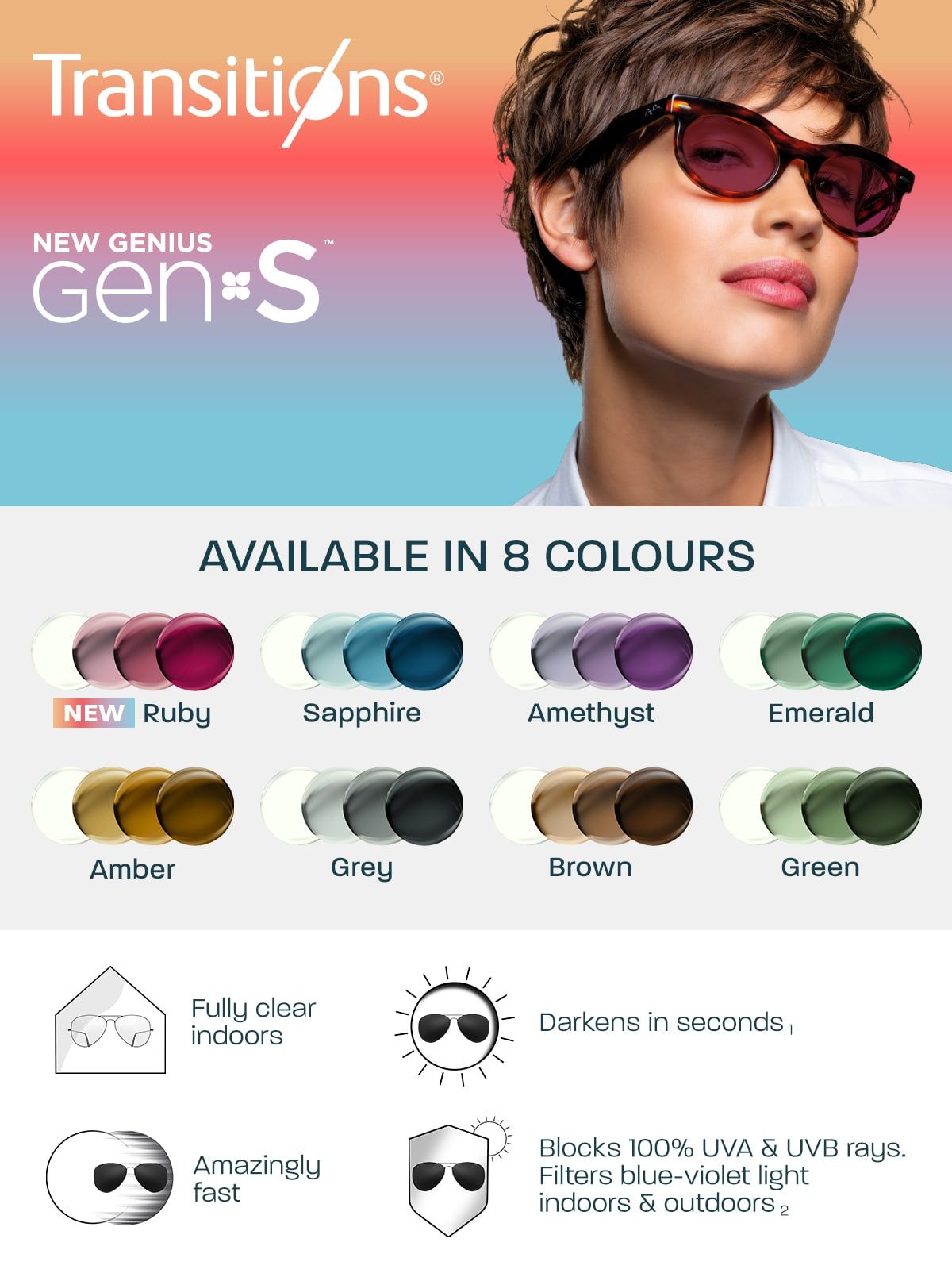
Photochromic lenses, also known as adaptive or transition lenses, automatically change tint based on the amount of UV (and sometimes visible) light present. Their primary function is to adapt to changing light conditions, going from clear indoors or in low light to a darker tint outdoors in sunlight. They block 100% of UV rays, providing essential eye protection.
Polarized lenses, on the other hand, have a special filter that blocks intense reflected light, specifically glare coming off horizontal surfaces like water, snow, or roads. They have a fixed tint level and do not change darkness based on light conditions. Their main purpose is to reduce blinding glare, improving clarity and comfort in bright, reflective environments. While polarized lenses block UV rays, their core technology targets glare reduction, whereas transition lens glasses focus on light adaptation and UV protection across varying light levels. Choosing between them depends on whether your main need is adaptable tint and UV protection or dedicated glare elimination. polarized vs transition glasses
Combining transition and polarization: benefits and drawbacks.
For those seeking the benefits of both technologies, it is possible to combine photochromic properties with polarization. Some advanced lens products, like certain generations of Transitions® lenses (e.g., Transitions® Vantage, though no longer produced, newer tech aims for similar features) or specific offerings from other manufacturers, integrate polarization into the light-adapting lens.
The key benefit of combined adaptive lenses is getting both variable tint and glare reduction in a single lens. As the lens darkens in sunlight, it also becomes polarized, significantly reducing glare from reflective surfaces. This can offer superior visual comfort in bright, challenging conditions compared to non-polarized transition lenses.
However, there are drawbacks. Combined lenses are typically more expensive than either standalone option. The level of polarization might not be as high as a dedicated, fixed-tint polarized lens. Furthermore, the polarization effect only becomes active or fully effective once the lens has darkened significantly. This means they won't provide glare reduction indoors or in low light, or when they are only partially darkened outdoors. Availability might also be limited depending on your prescription, frame choice, or preferred lens material. Despite these points, for many, the convenience of a single lens offering both features is highly appealing for their light-adaptive lenses. transition polarized lenses
Blue light transition lenses
In the age of digital screens and increased indoor time, blue light exposure has become a significant topic in eye health discussions. Many are now seeking ways to filter potentially harmful blue light. Integrating blue light filtering into transition lens glasses offers a comprehensive eyewear solution for modern lifestyles.
Addressing blue light exposure: benefits of blue light filtering.
Blue light is part of the visible light spectrum emitted by the sun, but also significantly by digital devices like computers, smartphones, and tablets, as well as fluorescent and LED lighting. While sun exposure is the largest source of blue light outdoors, concerns often focus on prolonged exposure from screens indoors.
Blue light filtering lenses are designed to block or absorb a portion of this blue-violet light. Potential benefits associated with these filters include reducing digital eye strain, alleviating headaches and blurred vision linked to screen use, and potentially helping regulate sleep patterns by reducing exposure in the evening (though research in these areas is ongoing). For those spending significant time in front of screens, adding blue light filtering provides an extra layer of comfort and potential protection for their eyes. blue light filter glasses
Combining blue light filtering with photochromic technology.
Many modern transition lens glasses lines now incorporate blue light filtering technology directly into the lens material or coating. This combination provides users with comprehensive protection and visual comfort across different environments and light conditions in 2025.
With combined adaptive lenses, you gain the benefits of blue light filtering while indoors or using digital devices, helping to reduce eye strain associated with screen time. Then, upon going outdoors, the photochromic technology activates, providing automatic adaptation to sunlight, full UV protection, and continued filtering of outdoor blue light. This means a single pair of glasses can effectively manage both indoor blue light concerns and outdoor sun/UV exposure. This makes photochromic lenses with blue light filtering an incredibly versatile option for individuals with active digital and outdoor lives. transition lens glasses with blue light filter
Transition lenses dark enough
One of the most frequent questions potential users have is, "Do transition lens glasses get dark enough to replace sunglasses?" The answer depends on several factors and user expectations.
The maximum darkness achieved by photochromic lenses is influenced by the intensity of UV light present (which is the primary catalyst for standard lenses), ambient temperature (lenses tend to get darker in colder conditions and lighter in warmer conditions), and the specific lens technology or generation. Newer generations, such as Transitions Signature GEN 8, are engineered to get darker and activate faster than previous versions. Some specialized versions, like Transitions XTRActive, are designed to get particularly dark, even reacting to some visible light, which helps them darken more effectively behind a car windshield where UV light is blocked.
While modern adaptive glasses can reach darkness levels comparable to Category 2 or 3 sunglasses (suitable for most bright conditions), they typically won't get as dark as very dark Category 4 lenses used for extreme conditions like mountaineering or glacier travel. "Dark enough" is also subjective and varies from person to person based on their light sensitivity. For general use, sunny days, and UV protection, they are usually sufficient. If you require extremely dark tints or consistent sunglass-level darkness inside a car (where standard transition lenses have limitations unless they are an XTRActive type), a dedicated pair of sunglasses or clip-ons might still be necessary. However, for everyday adaptability, transition lens glasses offer a high level of performance for varying light. how dark do transition lenses get
Purchasing Transition Lens Glasses
Choosing the right place and understanding the key factors involved in buying transition lens glasses is essential to ensure you get a pair that meets your vision needs, fits comfortably, and provides the performance you expect in 2025. This section guides you through the options, from online retailers to local opticians, and highlights critical considerations before making your purchase.
Online Retailers vs. Local Opticians
The decision of where to purchase your photochromic lenses often comes down to balancing convenience, cost, and personalized service. Both online retailers and brick-and-mortar opticians offer distinct advantages when buying light-adaptive eyewear.
Advantages of buying online: selection, price, convenience.
Buying transition lens glasses online provides unparalleled convenience. You can browse a vast selection of frames and lens options from the comfort of your home at any time. Online retailers typically have lower overheads than physical stores, often translating into more competitive pricing for your adaptive lenses.
The variety of frame styles, lens materials, coatings, and even specific photochromic technologies (like different Transitions® generations) available online is usually much larger than what a single local store can stock. This makes it easier to find exactly the combination of frame and lens technology you're looking for, especially for specific types of transition glasses or complex prescriptions. online transition glasses options
Benefits of local opticians: personalized service, fitting, adjustments.
Purchasing photochromic glasses from a local optician offers significant benefits, particularly regarding personalized service and fit. An experienced optician can provide face-to-face consultation, help you choose frames that fit your face shape and prescription needs, and ensure the lenses are correctly centered for optimal vision and photochromic performance.
They can also take precise measurements, crucial for progressive transition lenses, and offer professional fitting and adjustments to ensure your glasses are comfortable and sit correctly on your face. Local opticians provide ongoing support, such as free adjustments and minor repairs, which is a major advantage if your adaptive lenses need fine-tuning after purchase. get fitted for transition lenses locally
GlassesUSA Review: Costs and Options
Many consumers considering buying transition lens glasses online look at retailers like GlassesUSA. They are known for offering a wide range of frames and lens options, including various types of photochromic lenses such as the popular Transitions® brand. Prices for transition lenses through online platforms like this can vary significantly based on the frame chosen, prescription complexity, lens material, and added coatings.
GlassesUSA provides tools to help you virtually try on frames and select lens options online. They often run promotions that can make the cost of photochromic glasses more affordable compared to some traditional retail markups. However, the absence of in-person fitting means you must be confident in your measurements and frame choice, though they typically offer return policies if the fit isn't quite right. GlassesUSA transition lens prices
Factors to Consider When Buying
Regardless of whether you buy online or locally, several crucial factors should influence your decision when purchasing transition lens glasses to ensure satisfaction and optimal vision in 2025.
Frame style and fit
The style and fit of your frame are paramount for any glasses, but particularly important for transition lens glasses. The frame must be comfortable for extended wear and suitable for the type of lens you need. Some prescriptions, especially high ones or progressive lenses, may work better with certain frame materials or shapes.
A properly fitting frame ensures the optical center of the lens aligns correctly with your pupil, which is vital for clear vision and for the photochromic technology to perform uniformly across the lens surface. Consider your lifestyle and choose durable frames if you are active. The frame also significantly impacts how your photochromic glasses look and feel. choose best frames for transition lenses
Lens material and coatings
The material of your transition lenses affects their weight, thickness, durability, and impact resistance. Common materials include standard plastic (CR-39), polycarbonate (lighter, more impact-resistant, good for kids and safety), Trivex (similar to polycarbonate but clearer), and high-index plastics (thinner for strong prescriptions). Choosing the right material ensures your adaptive lenses are comfortable and suitable for your needs.
Additionally, various coatings can enhance the performance and lifespan of your photochromic glasses. An anti-reflective (AR) coating reduces glare and improves clarity, crucial for driving at night or working on screens. A scratch-resistant coating protects your investment. While transition lenses block UV rays, some coatings can add extra protection or features like enhanced blue light filtering, which is beneficial for indoor screen time even when the lenses are clear. transition lens materials and coatings
Retailer reputation and return policy
Before finalizing your purchase of adaptive glasses, especially if buying online, research the retailer's reputation. Look for reviews regarding their customer service, product quality, and reliability. A reputable retailer is more likely to provide genuine transition lens glasses from trusted manufacturers and stand behind their products.
Understanding the return policy is also critical. Given that photochromic lenses are a significant investment and the fit is crucial, know the terms for returns or exchanges if the glasses don't fit properly, the prescription is incorrect, or you are unsatisfied with the lens performance. A generous return policy can provide peace of mind when buying transition lens glasses.


Comments
Post a Comment